

Identifying the Critical Threshold for New Gutter Installation in 2026

As we move through 2026, many homeowners in New England are reassessing their home maintenance priorities. One of the most common questions we encounter is whether a failing rainwater drainage system simply needs a quick fix or a total overhaul.
While a minor leak can often be patched, there comes a point where structural fatigue makes replacement necessary. Understanding the subtle indicators of systemic failure can save you from catastrophic water damage to your foundation or roofline.
For property owners from Boston to Lowell, the harsh winters and heavy spring rains put immense stress on aluminum troughs and downspouts. If you find yourself calling for service every few months, you are likely dealing with an expired lifespan.
In this deep dive, we will explore the technical and visual markers that signal it is time for a professional gutter replacement. We want to ensure your home remains protected by a system that functions as a cohesive unit.
The Science of Gutter Longevity and Material Decay
Every material, whether it is seamless aluminum, copper, or galvanized steel, has a finite period of optimal performance. In the high-humidity environment of Massachusetts, oxidation and galvanic corrosion are constant threats to metal components.
When a gutter reaches the end of its life, the chemical composition of the metal changes, becoming brittle and prone to cracking. This is often caused by years of expanding and contracting due to extreme New England temperature fluctuations.
Once the structural integrity is compromised, even the best sealants will fail to hold a bond for long. At this stage, the risk of water bypassing the system and rotting your fascia boards becomes a mathematical certainty rather than a possibility.
Major Visual Indicators of Irreparable Gutter Damage
Visual inspections are your first line of defense against home exterior degradation. While some issues are obvious, others require a closer look at the fasteners, seams, and the overall alignment of the system.
In 2026, we utilize advanced hydrostatic testing to confirm what the eye can often see, systemic failure. However, you can spot many of these signs yourself just by walking around the perimeter of your house after a storm.
If you see orange or brown streaks on your siding, or if the paint is bubbling near the roofline, your gutters are likely failing. These “tears” in the home’s exterior envelope are clear indicators that moisture is escaping the intended channel.
Cracks, Splits, and Punctures in the Trough
Small cracks might seem insignificant during a light drizzle, but during a heavy downpour, they become major exit points for water. These fractures often occur at the stress points where hangers meet the metal or along the bottom of the trough.
If you can see light through the bottom of your gutters, or if there are multiple jagged splits, the metal has become too thin to support its own weight. Patching these is like putting a bandage on a broken dam, eventually, the pressure will prevail.
Wide-scale pitting and thinning are signs that the protective coatings have worn away. Once the core metal is exposed to the elements, the rate of decay accelerates exponentially, making gutter replacement the only viable solution.
Sagging Sections and Improper Pitch Alignment
A functional gutter system relies on a precise slope or pitch to move water toward the downspouts using gravity. When gutters start to sag or pull away from the house, it is often because the wood behind them, the fascia, has started to rot.
Sagging is a sign of hardware failure. The spikes or hidden hangers may no longer have a solid grip on the structure. If multiple sections are leaning forward or dipping, the system is no longer capable of providing laminar flow.
Re-pitching an old, warped gutter is rarely successful because the metal has “memorized” its deformed shape. In 2026, homeowners are opting for reinforced seamless gutters that maintain their alignment even under heavy snow loads.
The Hidden Dangers: Secondary Signs of Gutter System Failure
Sometimes the most dangerous signs aren’t found on the gutters themselves, but in the surrounding areas of your home. These secondary symptoms indicate that your drainage strategy is currently failing to protect your investment.
When water is not properly channeled, it seeks the path of least resistance, which usually leads to your basement or foundation. This is where the most costly water damage in the home improvement world occur.
| Symptom | What it Means | Long-term Risk |
| Peeling Siding Paint | Water is overflowing and running behind the siding. | Wood rot and mold growth in wall cavities. |
| Foundation Cracks | Excess water is pooling at the base of the house. | Structural shifting and basement flooding. |
| Eroded Landscaping | Constant overflow is washing away soil and mulch. | Trenching and hydraulic pressure on walls. |
| Interior Attic Leaks | Water is backing up under the shingles (wicking). | Decking rot and ruined insulation. |
Basement Moisture and Mildew Growth
If you notice a musty smell in your basement or see “efflorescence” (white salty powder) on your concrete walls, check your gutters. When downspout extensions or the gutters themselves fail, thousands of gallons of water saturate the soil near your foundation.
This saturation creates hydrostatic pressure, forcing moisture through the porous concrete of your basement walls. Replacing your gutters is often the first and most effective step in a comprehensive basement waterproofing plan.
By installing a new, high-capacity system, you ensure that the water is moved at least six to ten feet away from the home’s footprint. This keeps the soil around your foundation stable and dry throughout the year.
Fascia and Soffit Rot: The Structural Connection
The fascia board is the wooden trim that holds your gutters in place. If your gutters are constantly overflowing or leaking from the back, this wood remains perpetually damp, leading to fungal decay.
Once the fascia rots, it can no longer support the weight of the gutters, creating a dangerous cycle of failure. If your contractor tells you the wood is soft, you cannot simply re-hang the old gutters; you need a full system replacement including the wood.
Protecting the soffit vents is also critical for attic ventilation. When gutters fail, moisture can enter these vents, causing mold to grow on your rafters and reducing the R-value of your blown-in insulation.
Assessing When Gutter Replacement Is Needed
In 2026, we advise homeowners to look at the “Rule of Three.” If more than three sections of your gutter system have leaks, or if the same spot repeatedly leaks, it is time for a new installation.
When gutter damage is widespread, a professional assessment can help determine whether a new seamless gutter system is appropriate for your home.
When a Full Gutter Replacement is Mandatory
Systemic Rust: You see orange spots or “freckles” throughout the entire length of the troughs.
Multiple Leaking Seams: Old sectional gutters are notorious for leaking at every 10-foot junction as the sealant fails.
Widespread Rot: The fascia boards are crumbling or soft behind the gutter line.
Obsolescence: You are still using 4-inch gutters that cannot handle the 2026 rainfall intensities common in New England.
The Benefits of Upgrading to Modern Seamless Gutter Systems
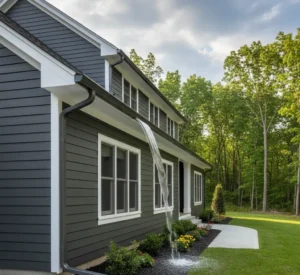
If you decide that replacement is the right path, moving to a seamless aluminum system is the most popular choice in 2026. Unlike traditional gutters sold in sections, seamless versions are custom-rolled on-site to the exact length of your home.
This lack of seams removes the primary failure point of the system. Without joints, there is nowhere for the water to leak and nowhere for debris to snag and cause a clog. It is a much more aerodynamic and efficient design.
Furthermore, modern gutters come in a variety of K-style and Half-Round profiles that can enhance the architectural beauty of your home. You can choose colors that perfectly match your trim, making the gutters almost invisible.
Increased Capacity with 6-Inch Oversized Gutters
Many older homes in Massachusetts were built with 5-inch gutters, which were sufficient for the weather patterns of previous decades. However, in 2026, we are seeing more voluminous rain events that require higher capacity.
Upgrading to 6-inch gutters increases the water volume capacity by about 40%. This prevents the “waterfall effect” over the front of the gutter during heavy summer thunderstorms or rapid spring snowmelts.
Pairing these larger troughs with 3×4 inch oversized downspouts ensures that debris and water move out of the system quickly. It is the ultimate insurance policy for your home’s exterior drainage needs.
Enhanced Mounting Systems and Structural Strength
Old-fashioned spikes and ferrules tend to pull out over time, leaving large holes in your wood. Today’s gutter replacement projects use heavy-duty internal hidden hangers screwed directly into the rafters.
This provides a much higher load-bearing capacity, which is essential for the ice and snow accumulation we face in New Hampshire and Maine. These hangers are invisible from the ground, providing a sleek, clean look for your roofline.
By distributing the weight more evenly, these modern fasteners prevent the gutters from twisting or pulling away under stress. This significantly extends the interval between maintenance visits.
Preparing Your Home for Gutter Replacement: What to Know
A professional gutter installation is a relatively quick process, usually completed in a single day for a standard residential home. However, there are a few things you should check before the crew arrives.
First, ensure that your roofing shingles are in good condition. If you are planning a roof replacement in the next year, it is often best to do both at the same time to ensure the drip edge is integrated perfectly between the two systems.
Second, consider your landscaping. If you have bushes or trees touching the gutters, pruning them back will provide the installers with better access and prevent branches from scratching your new powder-coated finish.
The Importance of Drip Edge Integration
The drip edge is a L-shaped metal flashing that directs water from the roof shingles into the gutter. If this is missing or installed incorrectly, water can run behind the gutter, even if the gutter itself is new.
During a replacement, our technicians inspect the drip edge to ensure it overlaps the back of the new trough. This creates a waterproof seal that protects your wood and foundation from “back-flow” issues.
In 2026, this integration is a non-negotiable part of a high-quality installation. It is the difference between a system that lasts 10 years and one that lasts 30 years.
Skyfall Gutters: Your Trusted Partner for Gutter Replacement
We understand that replacing your gutters is a significant decision. Our team is dedicated to providing the highest level of technical expertise and customer service to homeowners throughout the New England region.
Whether you are dealing with a historic home in Boston or a modern build in Worcester, we have the tools and materials to create a custom rainwater management solution that works for your specific environment.
Skyfall Gutters’ Main Service Areas for Gutter Replacement:
Protecting Your Home’s Future with New Gutters
Recognizing the signs you need gutter replacement is the first step toward securing your home against the elements. While it can be tempting to keep patching an old system, recurring leaks and the risk of collateral damage make replacement the smarter choice.
In 2026, a new gutter system is more than just a utility, it is a critical component of your home’s structural health and curb appeal. By choosing high-quality materials and professional installation, you can rest easy knowing your home is prepared for whatever the weather brings.
Don’t wait for the next major storm to find out your gutters have failed. Take a proactive approach and give your home the protection it deserves.
Are you ready for a free inspection and a custom quote? Call Skyfall Gutters today at: (978) 827-8168
For more information about our services or to schedule a consultation, visit our Contact Page.


